
 |
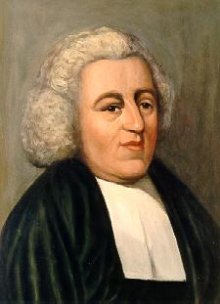
| John Newton |
Cowper I knew only as a poet and hymn-writer who struggled with depression, so it was a bit surprising to find that the Cowper and Newton Museum in Olney is mostly about Cowper, with only one room devoted to Newton--perhaps for tourists like us who come to Olney because of Newton. True, the museum is located in the house where Cowper lived for almost twenty years (1768-1786), but
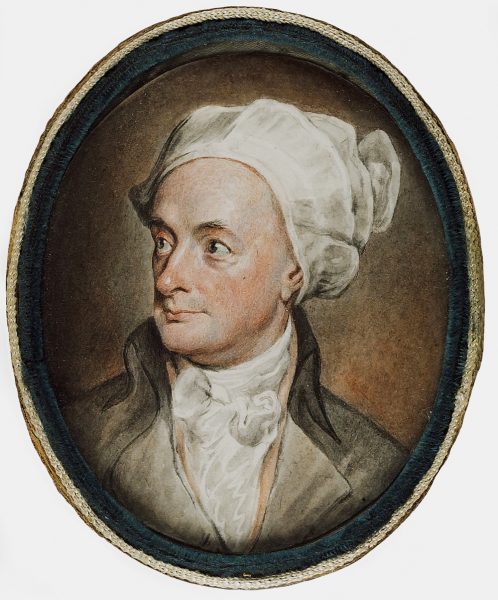 |
| Portrait of Cowper by William Blake in the Museum |
"William Cowper was the foremost poet of the generation between Alexander Pope and William Wordsworth and for several decades had probably the largest readership of any English poet. From 1782, when his first major volume appeared, to 1837, the year in which Robert Southey completed the monumental Life and Works of Cowper, more than a hundred editions of his poems were published in Britain and almost fifty in America."
The museum is filled with Cowper memorabilia--his sofa, his chair, his personal wash-stand, his handkerchiefs, and replicas of his rabbits. This approach feels a bit dated now, more than a century after the museum opened, but it works well because Cowper was famous for writing about everyday life, and the personal artifacts are frequently matched with lines from Cowper's writing and with portraits of the writer.
I neglected to take a picture of the front of the house, so this one is borrowed from the internet:
 |
| Photo courtesy of About Britain |

Outside is a stunning English garden that we would like to replicate back in Saskatchewan:

Also attractive is the idea of Cowper's writing nook, which he described in letters as follows:

"As soon as breakfast is over, I retire to my nutshell of a Summer House which is my verse manufactory, and here I abide seldom less than three hours, and not often more. In the afternoon I return to it again, and all the daylight that follows, except what is devoted to a walk, is given to Homer."
Just beyond the orchard on the other side of the garden is the massive manse where John Newton lived, now a private residence:

Across from the manse is the medieval church of St. Peter and Paul where he served as the equivalent of a modern-day pastor* between 1764-1780:

(*Newton was the curate-in-charge. The vicar, who presumably received the 'living' from the church, was not resident in Olney while Newton was there. Newton's salary as curate was only £60 a year; he required help from others to get by.)


... and enjoyed the view along the River Great Ouse:

Evidently, not everyone enjoyed the scenery as much as we did. George W. E. Russell attributed Cowper's depression to the bleak landscape:
"There is not in all England a more monotonous and uninspiring landscape than that wide tract of level grass-land which is watered by the Ouse and the Nene. It is not an ugly country; it is too richly green and too well timbered to admit of that derogatory epithet; but it is tame and featureless to the last degree, and in winter's mists and rains it is profoundly melancholy. No country that I know, unless it be the adjacent Fenland of Cambridgeshire, seems so well calculated to intensify depression and to transmute low spirits into morbid gloom." - George W. E. Russell, A Pocketful of Sixpences (London, 1907), pp. 201-2.
