Friday, August 17, 2018
Anglesey Abbey
We rode to Anglesey Abbey on my birthday. I'll let curious readers follow the links if they want to read more about the estate's history: In brief, it's the story of an early 20th-century English-American heir to an oil and railway fortune, who decided to spend his time and money collecting valuable things and creating a massive 18th-century-style English garden, and who donated the property to the National Trust when he died so that the public can get a taste of what it was like to live as one of the 0.25%. The house is interesting ...
... the library is fascinating...
... and the landscaped property is lovely:
We plan to visit again.
The bike ride there and back--about six and a half miles each way--was almost as much fun as the Abbey itself, and now that we have gone that far successfully, we have our sights on longer trips.
Sunday, August 12, 2018
Leicester City
Our destination on day 2 of our weekend car-rental excursion was the city of Leicester. Today Leicester is probably best known for the Leicester City Football Club; we were interested in something a little more medieval.
We began our visit with a rainy walk through Abbey Park ...
... which turned out to be the highlight of the day.
Abbey Park takes its name from the Abbey of Saint Mary de Pratis, an Augustinian monastery that was dissolved in 1538 by order of Henry the VIII and quickly dismantled. Even the stone from the foundations was removed and reused in other buildings. The complex was so thoroughly obliterated that until archaeological excavations in the early 20th century, no one knew where precisely the abbey had been located. The low walls that now stand in the park were built by archaeologists in the 1930's to mark their findings. t. was happy to chance upon the modern memorial to Cardinal Wolsey, who fell out of favour after failing to secure a divorce for Henry the VIII. Wolsey died in 1530 on his way to London to face trial for treason. We know he was buried at the abbey, though his tomb was never found. (We neglected to take any other pictures of the abbey ruins. Blame the rain.)
Abbey Park also includes the ruins of Cavendish House, a mansion built in the early 17th century using stone from the abbey ruins. Christiana (Bruce) Cavendish, the Countess of Devonshire--and, more importantly, Lady Anne Halkett's godmother--took ownership of the mansion in 1628 after her husband died. In 1645 the mansion was burned by retreating royalist troops during the English civil war.
We didn't let the rain ruin our day:
Tourism in Leicester received a boost in 2012 when the remains of the last Plantagenet king, Richard III (1452-1485), were discovered in a "car park" behind a building near what is now Leicester Cathedral.
Richard was killed in the battle of Bosworth Field, and his successor, Henry VII, the first of the Tudors, saw no reason to honour his predecessor's legacy. In 2015 bad king Richard at last received a royal funeral, and was re-buried in Leicester Cathedral:
While it is a medieval church, it was only designated a cathedral in 1927, and is tiny in comparison to the Norman cathedrals we visited in Ely and Norwich:
We found both the tomb and the cathedral underwhelming, and decided to take a pass on the Richard III visitor centre, and the chance to see where Richard's bones were discovered. (If you are interested in more detail, you might find "The King in the Car Park" documentary entertainingly absurd, says t.)
On our way out to our own car park we stopped in at the remains of a Roman bathhouse:
We began our visit with a rainy walk through Abbey Park ...
... which turned out to be the highlight of the day.
Abbey Park takes its name from the Abbey of Saint Mary de Pratis, an Augustinian monastery that was dissolved in 1538 by order of Henry the VIII and quickly dismantled. Even the stone from the foundations was removed and reused in other buildings. The complex was so thoroughly obliterated that until archaeological excavations in the early 20th century, no one knew where precisely the abbey had been located. The low walls that now stand in the park were built by archaeologists in the 1930's to mark their findings. t. was happy to chance upon the modern memorial to Cardinal Wolsey, who fell out of favour after failing to secure a divorce for Henry the VIII. Wolsey died in 1530 on his way to London to face trial for treason. We know he was buried at the abbey, though his tomb was never found. (We neglected to take any other pictures of the abbey ruins. Blame the rain.)Abbey Park also includes the ruins of Cavendish House, a mansion built in the early 17th century using stone from the abbey ruins. Christiana (Bruce) Cavendish, the Countess of Devonshire--and, more importantly, Lady Anne Halkett's godmother--took ownership of the mansion in 1628 after her husband died. In 1645 the mansion was burned by retreating royalist troops during the English civil war.
We didn't let the rain ruin our day:
![]() |
| Lunch at the Peppercorn Cafe |
Tourism in Leicester received a boost in 2012 when the remains of the last Plantagenet king, Richard III (1452-1485), were discovered in a "car park" behind a building near what is now Leicester Cathedral.
Richard was killed in the battle of Bosworth Field, and his successor, Henry VII, the first of the Tudors, saw no reason to honour his predecessor's legacy. In 2015 bad king Richard at last received a royal funeral, and was re-buried in Leicester Cathedral:
While it is a medieval church, it was only designated a cathedral in 1927, and is tiny in comparison to the Norman cathedrals we visited in Ely and Norwich:
We found both the tomb and the cathedral underwhelming, and decided to take a pass on the Richard III visitor centre, and the chance to see where Richard's bones were discovered. (If you are interested in more detail, you might find "The King in the Car Park" documentary entertainingly absurd, says t.)
On our way out to our own car park we stopped in at the remains of a Roman bathhouse:
(The soldiers are not original.)
Wednesday, August 8, 2018
The Home of Amazing Grace
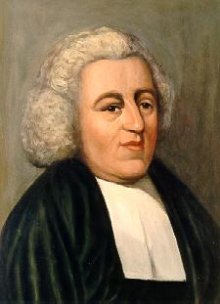
From Bedford we drove 12 miles west to the town of Olney, where John Newton (1725-1807) and his friend, the poet William Cowper (1731-1800), wrote a volume of hymns, including Newton's "Amazing Grace."
Olney was on our list of out-of-the-way places to see, partly because we went on a John Newton kick a few years ago and read through Newton's 1793 Letters to a Wife by the Author of Cardiphonia, and then his more well-known 1764 volume, An Authentic Narrative of some Remarkable and Interesting Particulars in the Life of John Newton Communicated in a Series of Letters to the Reverend Mr. Haweis, Rector of Aldwinckle, Northamptonshire, and by him (at the Request of Friends) Now Made Public. Despite the title, Newton's autobiography is very accessible, as well as remarkable and interesting. It is next on my list of bed-time story books I plan to read to s. (10-year-olds, it turns out, still appreciate bed-time stories.)
Cowper I knew only as a poet and hymn-writer who struggled with depression, so it was a bit surprising to find that the Cowper and Newton Museum in Olney is mostly about Cowper, with only one room devoted to Newton--perhaps for tourists like us who come to Olney because of Newton. True, the museum is located in the house where Cowper lived for almost twenty years (1768-1786), but
during the 18th and 19th centuries, it was Cowper who was the celebrity author. According to whoever wrote the entry on Cowper for the Poetry Foundation,
The museum is filled with Cowper memorabilia--his sofa, his chair, his personal wash-stand, his handkerchiefs, and replicas of his rabbits. This approach feels a bit dated now, more than a century after the museum opened, but it works well because Cowper was famous for writing about everyday life, and the personal artifacts are frequently matched with lines from Cowper's writing and with portraits of the writer.
I neglected to take a picture of the front of the house, so this one is borrowed from the internet:
Inside you can visit Cowper's hall, his parlour, and his bedroom, as well as a lace-making exhibit:
Outside is a stunning English garden that we would like to replicate back in Saskatchewan:
Also attractive is the idea of Cowper's writing nook, which he described in letters as follows:
"I write in a nook that I call my Bouderie; it is a Summer House not much bigger than a Sedan chair, the door of which opens into the garden that is now crowded with pinks, roses and honeysuckles, and the window into my neighbour's orchard. ... It is secure from all noise, and a refuge from intrusion."
"As soon as breakfast is over, I retire to my nutshell of a Summer House which is my verse manufactory, and here I abide seldom less than three hours, and not often more. In the afternoon I return to it again, and all the daylight that follows, except what is devoted to a walk, is given to Homer."
Just beyond the orchard on the other side of the garden is the massive manse where John Newton lived, now a private residence:
Across from the manse is the medieval church of St. Peter and Paul where he served as the equivalent of a modern-day pastor* between 1764-1780:
(*Newton was the curate-in-charge. The vicar, who presumably received the 'living' from the church, was not resident in Olney while Newton was there. Newton's salary as curate was only £60 a year; he required help from others to get by.)
From the churchyard we walked around a nearby park, saw some birds ...
... and enjoyed the view along the River Great Ouse:
Evidently, not everyone enjoyed the scenery as much as we did. George W. E. Russell attributed Cowper's depression to the bleak landscape:
![]() |
| John Newton |
Cowper I knew only as a poet and hymn-writer who struggled with depression, so it was a bit surprising to find that the Cowper and Newton Museum in Olney is mostly about Cowper, with only one room devoted to Newton--perhaps for tourists like us who come to Olney because of Newton. True, the museum is located in the house where Cowper lived for almost twenty years (1768-1786), but
![]() |
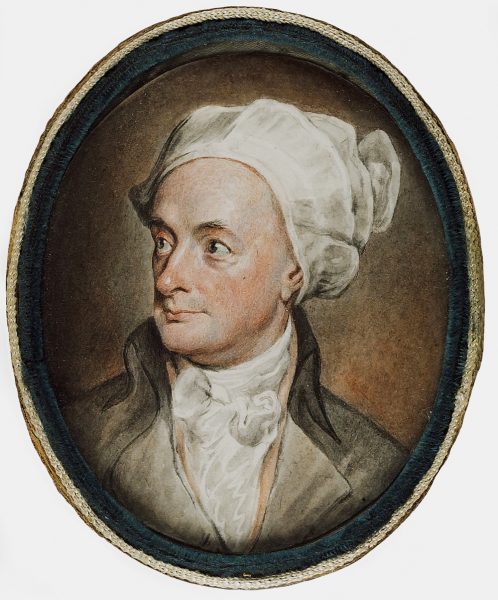
| Portrait of Cowper by William Blake in the Museum |
"William Cowper was the foremost poet of the generation between Alexander Pope and William Wordsworth and for several decades had probably the largest readership of any English poet. From 1782, when his first major volume appeared, to 1837, the year in which Robert Southey completed the monumental Life and Works of Cowper, more than a hundred editions of his poems were published in Britain and almost fifty in America."
The museum is filled with Cowper memorabilia--his sofa, his chair, his personal wash-stand, his handkerchiefs, and replicas of his rabbits. This approach feels a bit dated now, more than a century after the museum opened, but it works well because Cowper was famous for writing about everyday life, and the personal artifacts are frequently matched with lines from Cowper's writing and with portraits of the writer.
I neglected to take a picture of the front of the house, so this one is borrowed from the internet:
| Photo courtesy of About Britain |
Outside is a stunning English garden that we would like to replicate back in Saskatchewan:
Also attractive is the idea of Cowper's writing nook, which he described in letters as follows:
"I write in a nook that I call my Bouderie; it is a Summer House not much bigger than a Sedan chair, the door of which opens into the garden that is now crowded with pinks, roses and honeysuckles, and the window into my neighbour's orchard. ... It is secure from all noise, and a refuge from intrusion."
"As soon as breakfast is over, I retire to my nutshell of a Summer House which is my verse manufactory, and here I abide seldom less than three hours, and not often more. In the afternoon I return to it again, and all the daylight that follows, except what is devoted to a walk, is given to Homer."
Just beyond the orchard on the other side of the garden is the massive manse where John Newton lived, now a private residence:
Across from the manse is the medieval church of St. Peter and Paul where he served as the equivalent of a modern-day pastor* between 1764-1780:
(*Newton was the curate-in-charge. The vicar, who presumably received the 'living' from the church, was not resident in Olney while Newton was there. Newton's salary as curate was only £60 a year; he required help from others to get by.)
From the churchyard we walked around a nearby park, saw some birds ...
... and enjoyed the view along the River Great Ouse:
Evidently, not everyone enjoyed the scenery as much as we did. George W. E. Russell attributed Cowper's depression to the bleak landscape:
"There is not in all England a more monotonous and uninspiring landscape than that wide tract of level grass-land which is watered by the Ouse and the Nene. It is not an ugly country; it is too richly green and too well timbered to admit of that derogatory epithet; but it is tame and featureless to the last degree, and in winter's mists and rains it is profoundly melancholy. No country that I know, unless it be the adjacent Fenland of Cambridgeshire, seems so well calculated to intensify depression and to transmute low spirits into morbid gloom." - George W. E. Russell, A Pocketful of Sixpences (London, 1907), pp. 201-2.
Monday, August 6, 2018
The Panacea Society
Just down the street from the John Bunyan Museum is a large property
that was once the headquarters of the Panacea Society, and is now home
to the Panacea Museum. I was anxious to get to our next
destination, so we only had time to take a brief glimpse at a few rooms in the museum--long enough to be thoroughly intrigued.
At its peak in the early 20th century the Panacea Society had over 70 residents living in the community in Bedford. According to the Panacea Museum website, eventually "[o]ver two thousand people became members of the Panacea Society" from around the world.
The society is most well-known for an advertising campaign to pressure 24 Anglican bishops to open a sealed box of prophecies left behind by the 18th-century prophetess, Joanna Southcott:
Before her death in 1814, the 64-year-old virgin had announced that she was pregnant. This news became a national sensation, and thousands of her followers made clothing for the promised child, Shiloh, the second-coming of the Messiah:
No child materialized, however, and Southcott died 10 months after announcing her "pregnancy."
Fast-forward to 1919 when Bedford resident, Mabel Barltrop (1866-1934), a widowed mother of four children, announced that she was Shiloh. Mabel changed her name to Octavia and, together with twelve female apostles, founded the Panacea society.
One of the society's main occupations was advocating for the opening of Joanna Southcott's box. True to its name, the society also advertised a panacea:
The Panacea Museum also hosts art exhibitions, though we didn't make it to the floor that held this one:
If I ever return to Bedford and have my druthers, I will give the John Bunyan Museum a pass (with all due respect), and spend my time at the Panacea.
Further Reading: As you would expect, the Wikipedia entries on the Panacea Society and Joanna Southcott contain basic information. The Panacea Museum website has a helpful overview of the society's history, but for some reason a much more detailed biography of Mabel Borthrop preserved on the Wayback Machine is no longer included on the site (HT: Wikipedia). I also consulted Stephen Coates's piece on Joanna Southcott's box.
At its peak in the early 20th century the Panacea Society had over 70 residents living in the community in Bedford. According to the Panacea Museum website, eventually "[o]ver two thousand people became members of the Panacea Society" from around the world.
The society is most well-known for an advertising campaign to pressure 24 Anglican bishops to open a sealed box of prophecies left behind by the 18th-century prophetess, Joanna Southcott:
Before her death in 1814, the 64-year-old virgin had announced that she was pregnant. This news became a national sensation, and thousands of her followers made clothing for the promised child, Shiloh, the second-coming of the Messiah:
(Read Genesis 49:10 for the details.)
No child materialized, however, and Southcott died 10 months after announcing her "pregnancy."
Fast-forward to 1919 when Bedford resident, Mabel Barltrop (1866-1934), a widowed mother of four children, announced that she was Shiloh. Mabel changed her name to Octavia and, together with twelve female apostles, founded the Panacea society.
One of the society's main occupations was advocating for the opening of Joanna Southcott's box. True to its name, the society also advertised a panacea:
"The cure was ordinary tap water over which Octavia had breathed and prayed. ... [D]emand from non-resident members prompted the development of a new method of transferring the healing power believed to be in Octavia’s breath. In a ceremony Octavia first prayed then breathed over long rolls of linen, which were then cut up into one-inch squares. Anyone applying for healing would be sent one of these small squares of healing linen. They were instructed to keep the linen square in a jug of water, and pray each time they used it. ... [O]ver 120,000 people have applied to the Panacea Society for healing since it began. Members of the Society meticulously archived the extensive correspondence from recipients of the healing squares replying whenever possible and the resulting archives are a fascinating record of faith and health from around the world."In 2012, when the last member of the society died, the religious movement officially ended. The society--now with considerable financial assets--changed its name to the "The Panacea Charitable Trust," and transformed the Bedford property into a museum. The Trust's dual aims are to support the study of the Panacea Society and other similar millenarian groups and to contribute to needy causes in the Bedford area. (Christopher Rowland once served on the board; Justin Meggitt of Cambridge University is currently board chair.)
The Panacea Museum also hosts art exhibitions, though we didn't make it to the floor that held this one:
If I ever return to Bedford and have my druthers, I will give the John Bunyan Museum a pass (with all due respect), and spend my time at the Panacea.
Further Reading: As you would expect, the Wikipedia entries on the Panacea Society and Joanna Southcott contain basic information. The Panacea Museum website has a helpful overview of the society's history, but for some reason a much more detailed biography of Mabel Borthrop preserved on the Wayback Machine is no longer included on the site (HT: Wikipedia). I also consulted Stephen Coates's piece on Joanna Southcott's box.
Friday, August 3, 2018
Bedford
About 25 miles south of Little Gidding is the town of Bedford, where we stopped for lunch by the River Great Ouse ...
... and climbed Bedford Castle Mound:
Our reason for stopping in Bedford, aside from the pleasant picnic spot, was to visit the shrine of another 17th-century protestant saint, whose best-selling book begins as follows:
The actual jail, of course, is long gone. Visitors today can view a replica in the John Bunyan Museum that stands next to a 19th-century Bunyan Meeting church building, a few blocks east of the old jail site:
In addition to the model jail cell, the museum contains a selection of 17th-century relics: This key may have belonged to Oliver Cromwell, this block of wood may have come from the Bedfordshire barn where Bunyan preached--that sort of thing. This door was removed from the Bedford County Jail when it was demolished in 1801:
Whether it goes back to 1672 is another question. The museum also includes a library of Bunyan's works published in a wide variety of modern languages.
In many ways, Nicholas Ferrar (1592-1637) of Little Gidding and John Bunyan (1628-1688) of Bedford could not be more different. Nicholas's father was an elite London merchant, members of the family were friends with royalty, and Nicholas served in parliament before the move to Little Gidding. John Bunyan's father was a tinker, just well-enough off to own his own cottage and provide for his son's basic education. Nicholas Ferrar was a Cambridge-educated scholar who was ordained by the future Archbishop of Canterbury. Bunyan was a nonconformist whose refusal to give up preaching without a government license led to his twelve-year imprisonment.
My historian spouse reminds me that they also belonged to different generations. The English civil war (1642-1651) that came between the death of Nicholas Ferrar in 1637 and the adult re-baptism of John Bunyan in 1653 changed England dramatically. Bunyan's imprisonment must be understood in the context of a sudden shift from toleration of nonconformists under Oliver Cromwell to an official attempt after the restoration of the monarchy in 1660 to enforce conformity to a single church. (I don't know enough to comment on non-conformity and toleration before the civil war--but the shift from toleration back to official prohibition is one significant difference.) In any case, even though they both lived in the 17th century, you can't directly compare Ferrar in the 1630's with Bunyan in the 1660's anymore than you can juxtapose the 1950's and the 1980's. Conditions for existence had changed.
Despite their differences, both shared an unwavering commitment to the proclamation of the gospel and to ordering their lives by their common faith.
... and climbed Bedford Castle Mound:
Our reason for stopping in Bedford, aside from the pleasant picnic spot, was to visit the shrine of another 17th-century protestant saint, whose best-selling book begins as follows:
"As I walked through the wilderness of this world, I lighted on a certain place where was a Den, and I laid me down in that place to sleep: and, as I slept, I dreamed a dream."The Den, I assume, was inspired by the Bedford County Jail where John Bunyan was imprisoned between 1660-1672, and where he began to write The Pilgrim's Progress:
The actual jail, of course, is long gone. Visitors today can view a replica in the John Bunyan Museum that stands next to a 19th-century Bunyan Meeting church building, a few blocks east of the old jail site:
In addition to the model jail cell, the museum contains a selection of 17th-century relics: This key may have belonged to Oliver Cromwell, this block of wood may have come from the Bedfordshire barn where Bunyan preached--that sort of thing. This door was removed from the Bedford County Jail when it was demolished in 1801:
Whether it goes back to 1672 is another question. The museum also includes a library of Bunyan's works published in a wide variety of modern languages.
In many ways, Nicholas Ferrar (1592-1637) of Little Gidding and John Bunyan (1628-1688) of Bedford could not be more different. Nicholas's father was an elite London merchant, members of the family were friends with royalty, and Nicholas served in parliament before the move to Little Gidding. John Bunyan's father was a tinker, just well-enough off to own his own cottage and provide for his son's basic education. Nicholas Ferrar was a Cambridge-educated scholar who was ordained by the future Archbishop of Canterbury. Bunyan was a nonconformist whose refusal to give up preaching without a government license led to his twelve-year imprisonment.
My historian spouse reminds me that they also belonged to different generations. The English civil war (1642-1651) that came between the death of Nicholas Ferrar in 1637 and the adult re-baptism of John Bunyan in 1653 changed England dramatically. Bunyan's imprisonment must be understood in the context of a sudden shift from toleration of nonconformists under Oliver Cromwell to an official attempt after the restoration of the monarchy in 1660 to enforce conformity to a single church. (I don't know enough to comment on non-conformity and toleration before the civil war--but the shift from toleration back to official prohibition is one significant difference.) In any case, even though they both lived in the 17th century, you can't directly compare Ferrar in the 1630's with Bunyan in the 1660's anymore than you can juxtapose the 1950's and the 1980's. Conditions for existence had changed.
Despite their differences, both shared an unwavering commitment to the proclamation of the gospel and to ordering their lives by their common faith.
Wednesday, August 1, 2018
Little Gidding
Unless you come on pilgrimage "to kneel where prayer has been valid," following the "broken king" Charles I or drawn by the famous lines in T. S. Eliot's poem, there is not much to see or do in Little Gidding beyond inspecting the tiny church, parts of which may go back to the building that was standing when Charles visited in the 1640's (see the links here and here).
I didn't notice a pig-sty, but in other respects T. S. Eliot's description of Little Gidding can't be matched:

If you came this way,
Taking the route you would be likely to take
From the place you would be likely to come from,
...
It would be the same at the end of the journey,
If you came at night like a broken king,
If you came by day not knowing what you came for,
It would be the same, when you leave the rough road
And turn behind the pig-sty to the dull façade
And the tombstone. And what you thought you came for
Is only a shell, a husk of meaning
From which the purpose breaks only when it is fulfilled
If at all. Either you had no purpose
Or the purpose is beyond the end you figured
And is altered in fulfilment. There are other places
Which also are the world's end, ...
But this is the nearest, in place and time,
Now and in England.
If you came this way,
Taking any route, starting from anywhere,
At any time or at any season,
It would always be the same: you would have to put off
Sense and notion. You are not here to verify,
Instruct yourself, or inform curiosity
Or carry report. You are here to kneel
Where prayer has been valid.
- From T. S. Eliot's "Little Gidding"
To be honest, we came to inform curiosity not to kneel, but out of respect for those who were already there when we barged in, I didn't get many pictures of the inside of the church:
I really like the "Four Quartets," of which "Little Gidding" is the final part, and it was neat to be able to pick up a copy and skim through the poem on location. Perhaps I will find that "the purpose is beyond the end [I] figured, and is altered in fulfilment."
At any rate, I am also fascinated by the story of the religious community that drew King Charles to Little Gidding in the first place.
The property was purchased in 1625 by Mary Ferrar, the widow of one of the founding members of the Virginia Company, and her son Nicholas. They were joined by her other son John, her daughter Susanna, and their extended families. Nicholas was ordained as a deacon by Archbishop Laud in 1626 and soon established a devotional routine based on the Book of Common Prayer that included daily services for the whole family--matins at 6:30 a.m., the litany at 10 a.m. and evensong at 4 p.m.--as well as hourly prayers and a night vigil with readings from the Gospels and Psalms. According to the Little Gidding Church website,
The best information we located about Little Gidding is in the Oxford Dictionary of National Biography entries on Little Gidding, Nicholas Ferrar, and John Ferrar. Less authoritative, but free alternatives may be found here, here and here.
Little Gidding was the first stop on our two-day car-rental excursion last weekend. Our next destination, via back roads and rolling hills, was Bedford.
I didn't notice a pig-sty, but in other respects T. S. Eliot's description of Little Gidding can't be matched:
If you came this way,
Taking the route you would be likely to take
From the place you would be likely to come from,
...
It would be the same at the end of the journey,
If you came at night like a broken king,
If you came by day not knowing what you came for,
It would be the same, when you leave the rough road
And turn behind the pig-sty to the dull façade
And the tombstone. And what you thought you came for
Is only a shell, a husk of meaning
From which the purpose breaks only when it is fulfilled
If at all. Either you had no purpose
Or the purpose is beyond the end you figured
And is altered in fulfilment. There are other places
Which also are the world's end, ...
But this is the nearest, in place and time,
Now and in England.
If you came this way,
Taking any route, starting from anywhere,
At any time or at any season,
It would always be the same: you would have to put off
Sense and notion. You are not here to verify,
Instruct yourself, or inform curiosity
Or carry report. You are here to kneel
Where prayer has been valid.
- From T. S. Eliot's "Little Gidding"
To be honest, we came to inform curiosity not to kneel, but out of respect for those who were already there when we barged in, I didn't get many pictures of the inside of the church:
I really like the "Four Quartets," of which "Little Gidding" is the final part, and it was neat to be able to pick up a copy and skim through the poem on location. Perhaps I will find that "the purpose is beyond the end [I] figured, and is altered in fulfilment."
At any rate, I am also fascinated by the story of the religious community that drew King Charles to Little Gidding in the first place.
The property was purchased in 1625 by Mary Ferrar, the widow of one of the founding members of the Virginia Company, and her son Nicholas. They were joined by her other son John, her daughter Susanna, and their extended families. Nicholas was ordained as a deacon by Archbishop Laud in 1626 and soon established a devotional routine based on the Book of Common Prayer that included daily services for the whole family--matins at 6:30 a.m., the litany at 10 a.m. and evensong at 4 p.m.--as well as hourly prayers and a night vigil with readings from the Gospels and Psalms. According to the Little Gidding Church website,
"To instruct the younger members of the extended family in the gospel story and to develop their manual dexterity, Nicholas devised a Harmony of the four gospels. This Harmony provided the narrative for the hourly gospel readings. To create it, individual lines were cut from the four gospel narratives and pasted together on the page to make one continuous text. The pages were also illustrated with engravings, some of which Nicholas may have brought back from his continental travels many years earlier. When King Charles heard of the Harmony’s existence, he sent to borrow it, returning it only when the family agreed to make another for him."I like telling my students this story to show that studying a synopsis of the Gospels--with parallel passages laid side-by-side--can be a devotional practice.
The best information we located about Little Gidding is in the Oxford Dictionary of National Biography entries on Little Gidding, Nicholas Ferrar, and John Ferrar. Less authoritative, but free alternatives may be found here, here and here.
Little Gidding was the first stop on our two-day car-rental excursion last weekend. Our next destination, via back roads and rolling hills, was Bedford.
Subscribe to:
Posts (Atom)